_edited.png)
From 88 to 78: How Kavya Engineered Her 10K Comeback with Netrin

By Kathit Sondhi
Not everyone starts out dreaming of podiums. Some just want to feel a little lighter, a little stronger, a little more alive.
Meet Kavya: the beginning of her journey
Kavya was one of them, not chasing medals but chasing the feeling of being better than yesterday. At 31, she joined Netrin with a simple yet powerful goal: to lose weight, run with ease, and enjoy the process.
She had already run a 10K before signing up, finishing it in 88 minutes. By the time I came in as her coach, she had been training at Netrin for a while, working on her general fitness and building a solid base.
After looking at her training history, my main goal was to get her used to different training intensities and see how her body responded, especially her recovery markers like heart rate variabiity(HRV) and resting heart rate (RHR). Once she repeated her Checkpoint test, I had a clear starting point. From there, we were ready to go deeper.
Checkpoint test: getting the baseline
Netrin’s Checkpoint test is like a science-backed video game for your heart and lungs. It's a smart movement-based assessment that mirrors key insights similar to a VO₂ max test, without all the wires and lab vibes! We capture how your body responds to effort and recovery, giving us a peek into your aerobic engine. You don’t just get a score, you get a story of where you are and how far you’ve come. For Kavya, it gave me a clear picture of where she stood and helped shape her training plan.

Getting back to 10K training with Lokmat marathon
Kavya was consistent, showing up every day, following her protocols, and regularly doing her Readiness Test to track internal load markers like HRV and RHR which track the physiological stress your body experiences in response to training, and tracking it helped us understand how her body was really coping, not just on the outside but from the inside as well.
Not long after we started working together, she expressed her desire complete another 10K at the Lokmat Marathon in Pune. She’d done it before, now we had a chance to do it better. That’s when we set a goal to beat her previous time.
Shift toward longer duration runs
We shifted the focus on working longer distance and duration properly. The periodized programming helped manage training load, recovery, and progression in a systematic way.
The idea was to improve her running efficiency, strengthen her aerobic system, and make sure she peaked at the right time. HRV and RHR data played a big role in helping me decide when to push and when to ease off.
Most of her base work was focused in Zone 2 and Zone 3. After a few weeks, I noticed something important. Kavya was now able to hold steady effort at lower heart rate zones. This indicated that she had developed the capacity to run efficiently in aerobic zones.
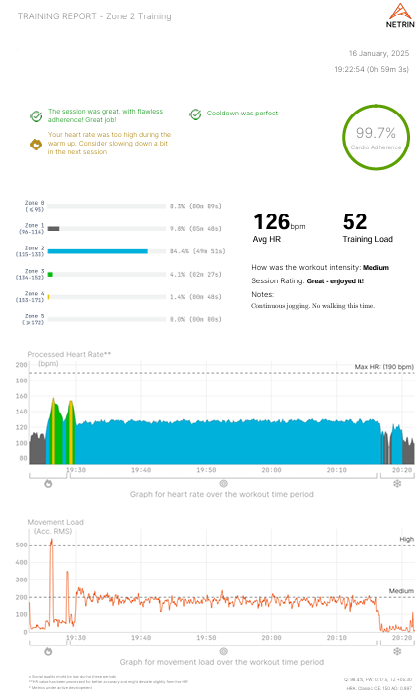
The main goal during this phase was to keep her effort below her MLSS (Maximal Lactate Steady State), which is the point where your body can keep up with clearing the lactate it's producing, so you can keep going for longer without burning out.
Post the endurance building phase
Once we completed around four weeks of solid base work, I divided her training into three clear phases.
Speed phase
By this time, five weeks of focused base-building work were done along with her earlier training. I was confident that Kavya could now keep her effort and heart rate in the lower zones, even during her long weekend runs. So, it was the right time to add some higher-intensity work. I started assigning burst workouts. These are short, explosive efforts of 30 to 40 seconds followed by a recovery period. They are designed to improve anaerobic power and lactate tolerance.
She did two burst sessions per week, combined with strength training and weekend long runs. This speed block lasted for two weeks.

Speed endurance phase
Now the goal was to make her faster and help her sustain that speed for longer durations. This is where tempo workouts came into play. I gave her sessions that pushed her into Zone 4, just near to her lactate threshold (the fastest pace that can be sustained during an endurance activity). These helped her stay composed and steady even when the effort started to feel tough. She did tempo runs twice a week, with lighter intensity and strength sessions in between. This gave her cardiovascular system enough time to recover while keeping the gains intact.

Taper phase (the magic phase)
This is one of the most crucial phases in any kind of race preparation. Taper is all about reducing the workload to help the body recover and reach peak performance on race day. I reduced her overall training load by 15 to 20 percent. All high-intensity runs were removed to help her recover. We did this for one full week right before the Lokmat Marathon.
When recovery meets progress
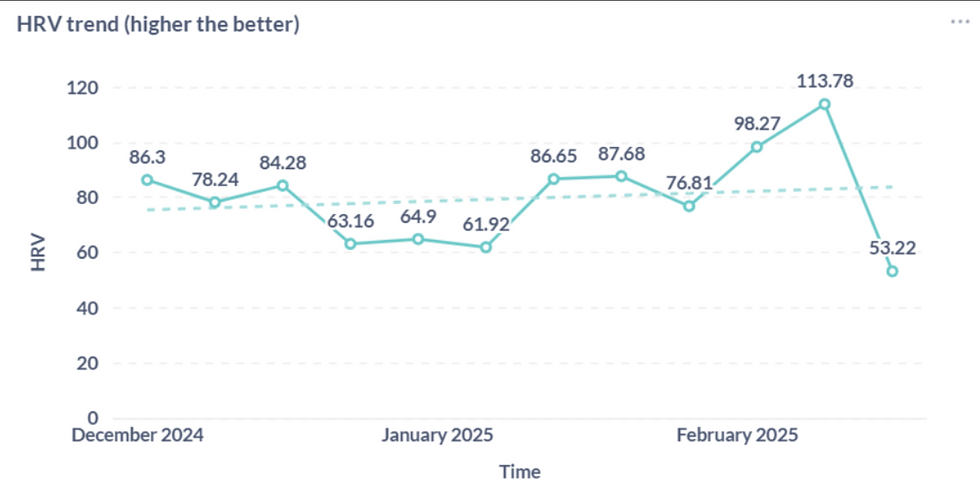
I also noticed a clear shift in her recovery metrics, which told a bigger story. Her HRV (Heart Rate Variability) baseline started trending upward. This was a strong sign that her body was adapting well to the training load. A pattern like this usually shows up when a person enters the supercompensation phase, which is the point where the body starts to bounce back stronger after each training session and fitness gains become more visible.
That’s when I knew we were not only getting fitter but also recovering better.
This 10K was stronger, calmer, and completely hers
Well, all the hard and smart work was done. Now it was time to test the limits. I sent her a race strategy document with guidelines on how to pace herself across different segments of the run. It had all the key info she needed to stay calm, composed, and consistent.
As her coach, I had seen her dedication firsthand throughout the training block. So, I was pretty confident she would run strong. But what actually happened on race day was nothing short of magic.
Race day stats
📍 Finish Time: 78 minutes
📍 Time Shaved Off: 10 minutes from her previous 10K
📍 Average Pace: 7.72 km/hr
She completed the race in 78 minutes, shaving off 10 mins from her last 10 k time
“I was not feeling tired while running like last time. I didn't even realize I was maintaining a pace of 7 min/km so easily!”

Trust the process
Kavya didn’t just run faster, she felt stronger, lighter, and more in control. From 88 to 78 minutes wasn’t magic. It was consistency, smart training, and listening to the body. We focused on her aerobic base, introduced speed in a structured way, and made sure her body was recovering right. Her HRV trends started climbing, which told me she was not just training hard but recovering like a pro. And honestly, her feedback post race said it all!
This journey reminded me how far structured zone base training and recovery-focused programming can take someone in a short time. The big win? She didn’t just finish the race. She owned it.
As a coach, watching Kavya’s journey unfold reminded me that real progress isn’t about chasing numbers. It’s about trusting the process. She showed up every day, focused on the basics, built her aerobic base, took recovery seriously, and trained with intent. The results weren’t luck, they were earned through consistency and smart work.
If you're ready to level up or just want to start laying down a smarter foundation, reach out to us. Your best run is just getting started.
About the Author
Kathit Sondhi is a Gold Medalist in international combat sports and a coach at Netrin, specializing in heart rate-based training. With elite-level athletic experience and deep expertise in performance optimization, he is passionate about helping individuals train smarter, maximize results, and unlock their full potential through data-driven fitness strategies.

Comments